
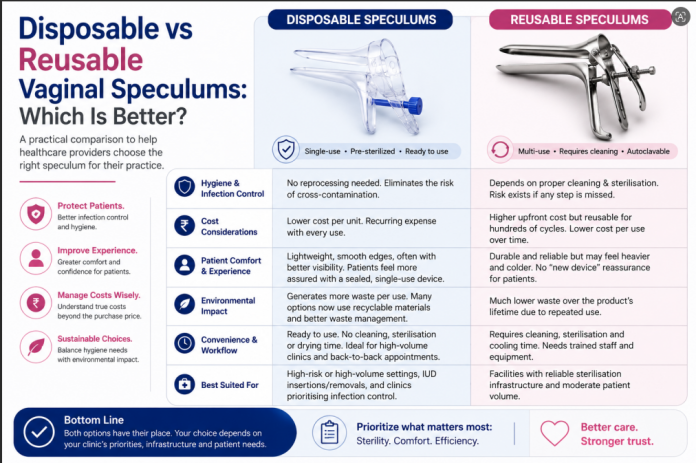
Choosing between a disposable and a reusable vaginal speculum is one of those decisions that looks simple on the surface but actually touches on infection control, budgeting, patient comfort, and even a clinic’s environmental footprint. Both options are still widely used across gynaecological practices, and both have legitimate arguments in their favour. This article breaks down the differences so healthcare providers can make an informed choice for their setting.
Understanding the Two Options
Before comparing them, it helps to be clear on what each option actually involves.
What Is a Reusable Speculum?
Reusable speculums are typically made of stainless steel or a similarly durable material. After each use, they go through a cleaning and sterilisation cycle, usually autoclaving, before being used again on another patient. They’ve been the clinical standard for decades and are still common in many hospitals and government health facilities.
What Is a Disposable Speculum?
Disposable speculums are made from medical-grade plastic, individually packaged, pre-sterilised, and intended for a single use before being discarded. They’ve become increasingly common in private clinics, diagnostic centres, and settings where patient throughput is high.
Comparing Disposable and Reusable Speculums
Hygiene and Infection Control
Reusable Speculums
Sterility depends entirely on the sterilisation process being followed correctly every single time. Autoclaving is generally reliable, but it introduces a chain of dependency — equipment must be functioning correctly, staff must follow protocol precisely, and turnaround time must be adequate. Any lapse anywhere in that chain creates a risk of cross-contamination.
Disposable Speculums
Since each unit is sealed and sterilised at the manufacturing stage and used only once, there’s no reprocessing step where errors can occur. This removes an entire category of infection-control risk, which is a significant reason many clinics now lean toward disposables for mucosal-contact procedures.
Cost Considerations
Upfront and Long-Term Costs
Reusable speculums cost more per unit initially but can be used hundreds of times, which historically made them the more economical choice over the long run. Disposable speculums are cheaper per unit but are a recurring expense with every exam.
Hidden Costs to Factor In
Reusable instruments come with ongoing costs that aren’t always accounted for upfront: autoclave maintenance, energy consumption, staff time for cleaning and sterilising, and the eventual cost of replacing worn or damaged instruments. When these are added up, the cost gap between the two options often narrows considerably.
Patient Comfort and Experience
Disposable plastic speculums are often designed with smoother edges, adjustable ratchet mechanisms, and sometimes integrated lighting for better visibility during the exam. Patients also tend to feel reassured seeing an instrument unwrapped from sealed packaging in front of them, which can reduce anxiety during an already sensitive procedure. Reusable metal speculums, while functionally reliable, can feel colder and heavier, which some patients find less comfortable.
Environmental Impact
The Case for Reusable
Metal speculums generate far less waste over their lifespan since a single instrument can serve hundreds of exams before being retired.
The Case for Disposable
Plastic speculums do contribute more waste per use, but many manufacturers are now producing them with recyclable materials and clinics are improving medical waste segregation to offset this. For procedures where sterility is critical, most facilities consider the infection-control benefit worth the trade-off.
Suitability for Specific Procedures
For high-frequency procedures such as IUD insertions and removals, disposables are often the more practical fit, since they eliminate the need for reprocessing between back-to-back appointments. This makes them a popular choice for clinics performing these procedures regularly.
Which Option Should You Choose?
Choose Reusable If:
- Your facility has reliable, well-maintained sterilisation infrastructure
- Patient volume is moderate, allowing adequate turnaround time between uses
- Long-term cost per use is the primary deciding factor
Choose Disposable If:
- Infection control is the top priority, especially for high-risk or high-volume settings
- Your clinic wants to reduce dependency on sterilisation staff and equipment
- Patient comfort and perceived hygiene matter to your practice’s positioning
- You’re performing frequent procedures like IUD insertions where quick turnover is essential
Final Verdict
There isn’t a single universally “better” option — the right choice depends on a clinic’s infrastructure, patient volume, and priorities. That said, the broader trend in modern gynaecological care is leaning toward disposables, largely because they remove the human-error factor from infection control entirely. For clinics evaluating their instrument supply chain, it’s worth reviewing options from established medical suppliers offering reliability and consistency across their disposable instrument range.
Ultimately, whichever option a practice chooses, the priority should remain the same: consistent sterility, patient comfort, and procedural reliability every single time.

