

What are jump squats exercise?
Jump squats exercise is a squat with an explosive jump that builds lower-body strength and power.
Best jump squats exercise
Bodyweight jump squats are best for beginners; weighted versions suit advanced users.
How to choose jump squats exercise
Choose a variation based on your fitness level and use proper form.
Introduction
Have you ever wondered why athletes seem to jump higher, sprint faster, and move more explosively than the average person? The answer often lies in powerful training methods that build both strength and speed. Among these exercises, jump squats stand out as one of the most effective bodyweight movements for developing explosive lower-body power while also improving endurance and coordination.
Unlike traditional squats that primarily focus on strength, jump squats introduce an explosive upward movement that recruits fast-twitch muscle fibers responsible for speed and power. This makes the exercise valuable not only for athletes but also for fitness enthusiasts looking to burn more calories, improve athletic performance, and increase functional fitness.
Whether your goal is weight loss, muscle development, improved sports performance, or simply adding variety to your workouts, learning the correct technique is essential. Performing the movement properly reduces injury risk while maximizing benefits for your legs, glutes, and core.
Quick Summary
- Improves lower-body power, balance, and explosive strength.
- Burns more calories than traditional squats due to higher intensity.
- Strengthens the quadriceps, glutes, hamstrings, calves, and core.
- Suitable for home workouts with no equipment required.
Jump Squats Exercise Benefits
Jump squats are classified as a plyometric exercise, meaning they train muscles to generate maximum force in a short period. This explosive movement strengthens the quadriceps, hamstrings, glutes, calves, hip flexors, and core while improving coordination between the upper and lower body.
Because the movement combines resistance with cardiovascular effort, jump squats can elevate heart rate quickly. Studies suggest that high-intensity plyometric exercises may increase calorie expenditure during and after workouts due to excess post-exercise oxygen consumption (EPOC). Many trainers include jump squats in HIIT routines because they provide strength and cardio benefits simultaneously.
The exercise also contributes to improved bone health by placing controlled impact stress on the skeletal system, encouraging stronger bones when performed safely. Athletes in sports such as basketball, volleyball, football, and tennis frequently incorporate jump training to improve vertical jump performance and acceleration.
Muscles Worked During Jump Squats
The movement activates multiple muscle groups at the same time, making it a highly efficient compound exercise.
| Muscle Group | Primary Role |
|---|---|
| Quadriceps | Knee extension during jump |
| Glutes | Hip power and explosive movement |
| Hamstrings | Stability and landing control |
| Calves | Push-off during jump |
| Core | Balance and posture |
| Hip Flexors | Assist explosive movement |
Training several muscle groups simultaneously increases overall functional strength and improves movement efficiency during sports and everyday activities.
How to Perform Jump Squats Exercise Correctly
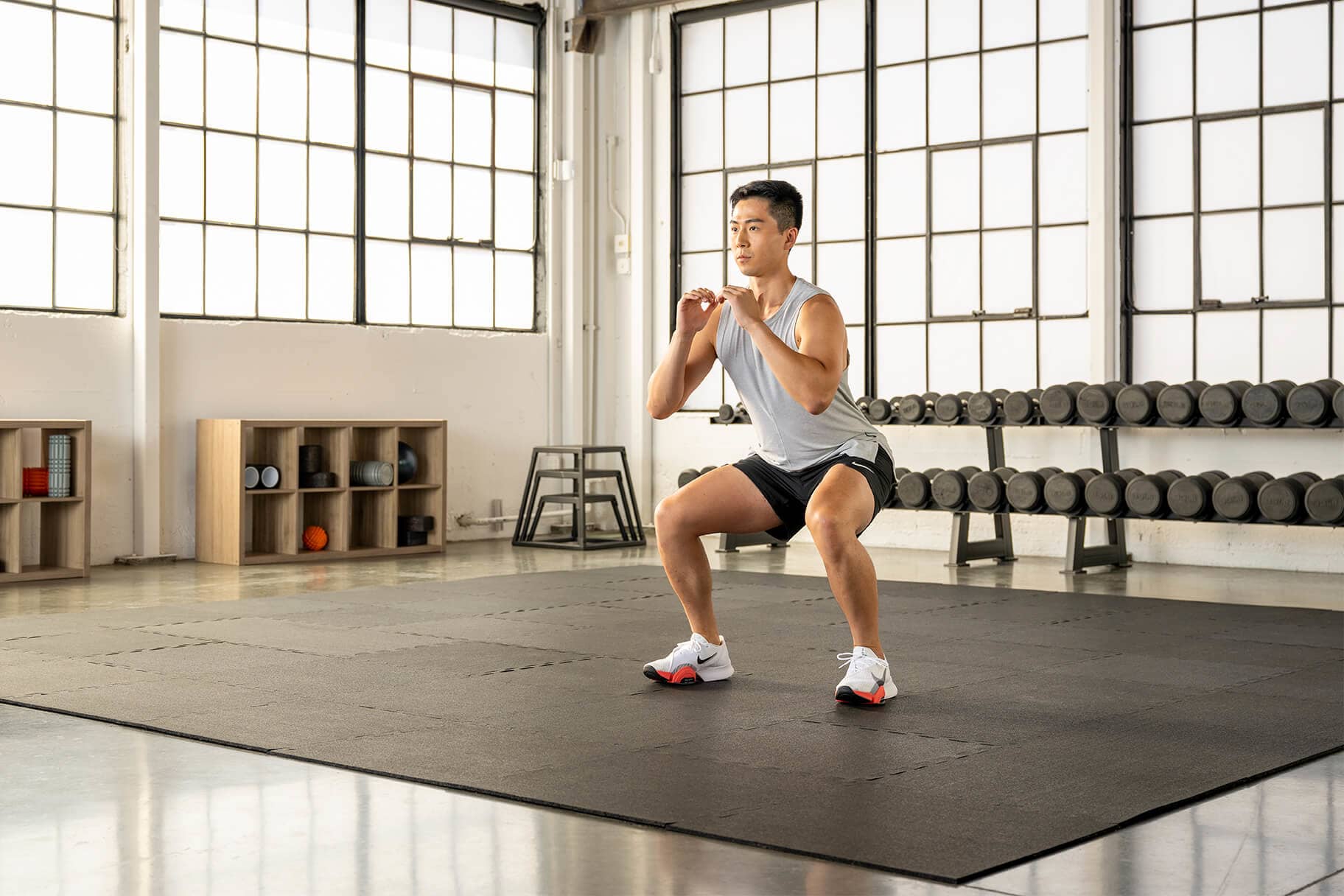
Proper technique is more important than speed or repetition count. Begin by standing with your feet approximately shoulder-width apart. Keep your chest lifted, engage your abdominal muscles, and maintain a neutral spine.
Lower into a regular squat until your thighs approach parallel to the floor while ensuring your knees track over your toes. Swing your arms naturally and explode upward by driving through your heels and the balls of your feet. Jump as high as you comfortably can while maintaining body control.
Land softly by bending your knees immediately upon contact. Absorb the impact through your hips and legs before moving into the next repetition. Controlled landings protect your knees and ankles while maintaining proper movement mechanics.
Why Jump Squats Are Different from Regular Squats
Although both exercises strengthen the lower body, their training effects differ considerably. Traditional squats primarily focus on muscle strength and hypertrophy through controlled resistance. Jump squats, on the other hand, emphasize explosive power and speed.
The rapid transition from lowering to jumping challenges the nervous system to recruit more muscle fibers quickly. This adaptation improves reaction time, agility, and athletic performance while increasing cardiovascular demand.
Many fitness coaches recommend combining both traditional and plyometric squat variations within a balanced workout routine to maximize strength and power development.
Real-Life Example
Imagine two recreational basketball players with similar strength levels. One performs only regular squats for several months, while the other combines strength training with plyometric exercises like squat jumps. The second athlete is more likely to notice improvements in vertical jump height, sprint acceleration, and quick directional changes because explosive training develops power alongside muscular strength.
This practical example demonstrates why many professional sports conditioning programs integrate plyometric drills into weekly training schedules.
Pros and Cons
Pros
- Builds explosive lower-body power
- Improves athletic performance
- Burns significant calories
- Requires no equipment
- Enhances coordination and balance
Cons
- Higher impact on joints
- Not ideal for beginners with poor squat form
- Requires adequate recovery
- Improper technique may increase injury risk
Expert Tips
- Warm up thoroughly before explosive exercises.
- Focus on soft, controlled landings.
- Maintain proper knee alignment.
- Prioritize quality over repetition count.
- Rest adequately between sets for maximum power output.
Common Mistakes
- Landing with stiff knees.
- Allowing knees to collapse inward.
- Jumping before mastering basic squats.
- Leaning too far forward.
- Performing excessive repetitions with poor form.
Who Should Use This
This exercise is ideal for athletes, runners, recreational sports participants, and individuals seeking to improve lower-body strength, calorie burning, and overall fitness. People preparing for sports requiring sprinting or jumping often benefit significantly from plyometric training.
However, individuals with knee injuries, ankle instability, severe arthritis, or recent lower-body surgeries should consult a healthcare professional before adding explosive exercises to their routine. Beginners may first develop strength through bodyweight squats before progressing to jumping variations.
Best Variations to Try
Several variations help keep workouts challenging while targeting different training goals.
Bodyweight squat jumps remain the safest starting point for beginners. As technique improves, resistance can be introduced using light dumbbells, weighted vests, or resistance bands.
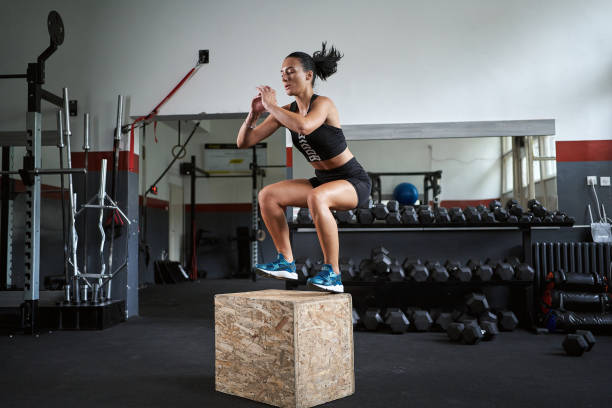
Advanced athletes often perform tuck jumps, box jumps, pulse squat jumps, or single-leg variations to increase difficulty and improve sport-specific performance. Each variation should be introduced gradually after mastering proper landing mechanics.
Training Frequency and Workout Integration
Most fitness professionals recommend including plyometric exercises two to three times weekly while allowing at least 48 hours of recovery between sessions involving maximal jumping.
Beginners may start with two to three sets of eight repetitions. Intermediate exercisers often perform three to four sets of ten to fifteen repetitions depending on conditioning levels. Athletes typically incorporate jump training within structured power-development programs rather than performing high volumes every day.
Combining jump squats with lunges, Bulgarian split squats, Romanian deadlifts, and core stability exercises creates a balanced lower-body workout.
Current Fitness Insights
Recent strength and conditioning research continues to support plyometric training for improving athletic performance. Many coaches report measurable improvements in vertical jump height after six to eight weeks of consistent jump training combined with resistance exercises.
Fitness tracking technology has also become increasingly common, allowing athletes to monitor jump height, landing force, and power output. This data-driven approach helps optimize training while reducing overtraining risk.
Additionally, many HIIT programs now incorporate explosive lower-body exercises because they increase heart rate rapidly and contribute to higher calorie expenditure during shorter workout sessions.
FAQs
Are jump squats exercise safe for everyday workouts?
Performing them daily is generally not recommended because explosive exercises require adequate recovery. Two or three weekly sessions usually provide better long-term results while reducing injury risk.
Do jump squats build muscle?
Yes. They stimulate muscle growth while primarily improving power, particularly in the quadriceps, glutes, hamstrings, and calves.
Should I use weights?
Only after mastering bodyweight technique. Adding resistance too early may compromise form and increase injury risk.
Can older adults perform jump squats?
Healthy older adults with good mobility may perform modified versions under professional guidance, but high-impact movements may not suit everyone.
How long before I notice results?
Most individuals notice improvements in power, coordination, and endurance within six to eight weeks of consistent training and proper recovery.
Summary Recap
Jump squats combine strength training with explosive movement, making them one of the most efficient exercises for developing lower-body power, improving athletic performance, enhancing cardiovascular fitness, and increasing calorie burn. When performed with correct technique and appropriate recovery, they strengthen multiple muscle groups simultaneously while supporting better balance, coordination, and functional movement.
Conclusion
Adding jump squats exercise to your fitness routine can significantly improve strength, speed, and overall athletic ability without requiring expensive equipment or a gym membership. Focus on mastering proper form, progress gradually, and combine this exercise with balanced strength training and recovery for the best long-term results. Whether you’re training for sports or simply aiming to become fitter and more powerful, consistent practice can deliver noticeable improvements in both performance and confidence.
Read More:-Height Increase Exercise: Best Stretches for Better Posture

